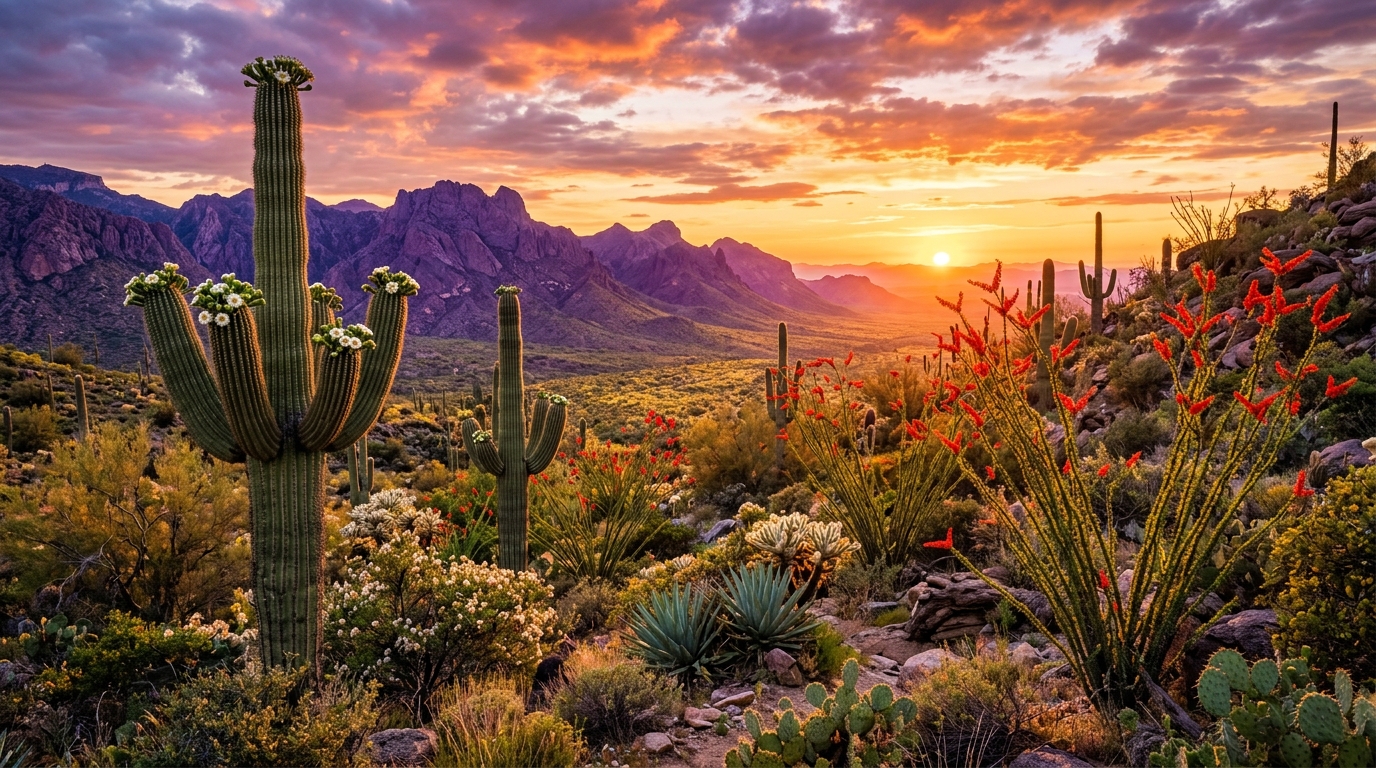
Deserts cover approximately one-third of Earth’s land surface. Defined by extreme moisture scarcity rather than heat alone, deserts encompass burning subtropical dunefields, high-altitude rain-shadow plateaus, and icy polar expanses. Rather than lifeless wastelands, deserts are evolutionary crucibles hosting remarkably specialized extremophile biodiversity.
To the untrained observer, the word ‘desert’ evokes images of barren, endless sand dunes baking under a merciless sun, devoid of life. In ecological reality, deserts are among the most fascinating, fragile, and biodiverse biomes on our planet. They are defined not by high temperatures, but by extreme aridity: a region where annual evapotranspiration significantly exceeds annual precipitation.
In this authoritative guide, we explore the meteorological mechanisms that create global deserts, examine xerophytic botanical adaptations, uncover physiological and behavioral survival strategies among desert fauna, investigate the fragile microscopic communities composing biological soil crusts, and address the accelerating crisis of desertification.
1. Meteorological Classification and Origins of Global Deserts
Ecologists classify arid regions based on the Aridity Index (AI)—the ratio of mean annual precipitation to potential evapotranspiration. Areas with an AI below 0.05 are classified as hyper-arid (true deserts), while areas between 0.05 and 0.20 are semi-arid scrublands. Deserts form through four distinct physical mechanisms:
- Subtropical Deserts (Hadley Cell Subsidence): Driven by global atmospheric circulation, hot air rising at the equator sheds its moisture and descends around 20° to 30° North and South latitude. This descending dry air warms adiabatically, evaporating cloud cover and bathing landscapes in intense, unobstructed solar radiation. Examples: Sahara, Arabian, and Great Victoria deserts.
- Rain-Shadow Deserts: Prevailing maritime winds encounter high mountain chains, forcing air upward. Moisture condenses on the windward slopes, leaving the leeward side trapped in permanent dry descent. Examples: Great Basin Desert (sheltered by the Sierra Nevada) and the Patagonian Desert (sheltered by the Andes).
- Coastal Fog Deserts: Cold oceanic currents running along western continental margins chill incoming marine air. Fog forms over the ocean, but the chilled air cannot rise to produce convective rain clouds as it moves inland over hot landmasses. The result is hyper-arid coastal deserts with high humidity but zero rain. Examples: Atacama Desert (Chile) and Namib Desert (Namibia).
- Continental Interior Deserts: Vast distances from oceanic moisture sources cause central continental interiors to remain hyper-arid. Examples: Gobi and Karakum deserts.
Comparison of Major Desert Types
2. Botanical Innovations: Xerophytes, Phreatophytes, and Ephemerals
Desert vegetation has evolved three radical evolutionary pathways to conquer drought:
A. Succulence and CAM Photosynthesis (The Water Savers)
True succulents, including American cacti, African aloes, and agaves, store massive volumes of water within swollen parenchyma stem tissues. A mature Saguaro cactus (Carnegiea gigantea) can absorb and store over 3,000 liters of water following a single monsoon downpour, expanding its pleated ribs like an accordion. These plants utilize Crassulacean Acid Metabolism (CAM), taking in CO2 exclusively during the cool desert night and keeping stomata sealed throughout the blazing day, slashing transpirational water loss by 85% compared to ordinary C3 plants.
B. Phreatophytes: Deep-Rooted Groundwater Miners (The Water Spenders)
Unlike shallow-rooted succulents, phreatophytic woody shrubs such as mesquite (Prosopis) and ironwood (Olneya tesota) deploy taproots that drill tens of meters straight down through bedrock fractures to tap subterranean water tables. Mesquite taproots have been recorded penetrating to depths of over 53 meters (175 feet), allowing these trees to maintain green foliage and transpire continuously even during multi-year surface droughts.
C. Ephemeral Annuals: The Drought Evaders
Rather than enduring drought, ephemeral wildflowers evade it entirely. Their seeds lie dormant in parched desert gravel for years, coated with chemical growth inhibitors (abscisic acid). When a rare, torrential rainstorm washes away the inhibitory coatings and saturates the soil, these plants explode into life, completing their entire lifecycle—germination, vegetative growth, flowering, and seed set—within a frantic 15 to 25 days before the desert dries again.
3. Faunal Adaptations: Mastering Dehydration and Hyperthermia
Animals cannot simply retreat into dormancy as easily as plant seeds. Desert fauna must balance metabolic water production, heat dissipation, and internal hydration through elegant physiological specializations:
- Metabolic Water Independence: The kangaroo rat (Dipodomys) of North American deserts never drinks liquid water in its entire adult life. It subsists entirely on dry seeds. Through the biochemical oxidation of carbohydrates during cellular respiration (C6H12O6 + 6O2 → 6CO2 + 6H2O), it manufactures all the water it requires internally. Kangaroo rats possess hyper-elongated Loops of Henle in their kidneys, allowing them to concentrate urine into an almost solid crystalline paste, losing virtually zero water.
- Thermal Windows and Countercurrent Brain Cooling: Large ungulates like the Arabian oryx (Oryx leucoryx) withstand body core temperatures of up to 46°C (115°F) without suffering brain damage. They employ a specialized vascular mesh at the base of the skull called the carotid rete. Venous blood cooled by evaporation in the nasal passages flows through this rete, cooling arterial blood headed toward the brain by several critical degrees.
- Nocturnal and Fossorial Behavior: During blistering summer days when desert surface temperatures exceed 70°C (158°F), the vast majority of desert fauna retreat underground. Just 30 centimeters below the surface, burrow temperatures remain stable and cool (around 26°C) with elevated relative humidity, shielding rodents, snakes, scorpions, and tortoises until darkness falls.
4. Cryptobiotic Soil Crusts: The Living Skin of the Desert
One of the most biologically crucial components of arid ecosystems is the biological soil crust (cryptobiotic or biocrust). Covering open spaces between desert shrubs, this living carpet consists of complex symbioses of cyanobacteria (such as Microcoleus vaginatus), lichens, mosses, and green algae.
Cyanobacterial filaments produce sticky polysaccharide sheaths that physically bind loose sand grains together, forming a resilient armor that prevents wind and water erosion. Furthermore, cyanobacteria and lichens actively fix atmospheric nitrogen gas into plant-available nitrates, providing up to 70% of total nitrogen input to desert plant communities. These biocrusts take decades to centuries to develop; a single off-road vehicle tire track or cattle hoofprint can shatter centuries of biological growth in seconds, triggering rapid erosion.
5. Desertification and Modern Threats
There is a fundamental difference between healthy, native desert ecosystems and the human-induced process of desertification. Desertification is the land degradation of dry sub-humid and semi-arid grasslands into artificial, barren wastelands. Driven by chronic overgrazing, intensive monoculture tillage, deforestation, and escalating global droughts, desertification claims over 12 million hectares of productive land every single year.
Combatting this degradation requires restorative land stewardship: planting drought-hardy native leguminous trees, protecting intact biological soil crusts, constructing stone water bunds to slow flash-flood runoff, and transitioning to holistic planned grazing regimes that mimic historic wild ungulate migrations.
6. Frequently Asked Questions (FAQs)
Q1: How does the Namib Desert beetle drink water from fog?
The Namib beetle (Stenocara gracilipes) climbs to the crest of coastal dunes at dawn and tilts its body at a 45-degree angle into the humid ocean breeze. Its hardened wing covers (elytra) are patterned with hydrophilic (water-attracting) bumps surrounded by hydrophobic (water-repelling) waxy troughs. Airborne fog droplets coalesce on the bumps, grow heavy, and roll down the waxy channels straight into the beetle’s mouth.
Q2: Why does desert air cool down so rapidly at night?
Water vapor is Earth’s most potent greenhouse gas. In humid biomes, ambient moisture in the air forms an invisible thermal blanket that absorbs longwave thermal radiation emitted by the ground, keeping nighttime temperatures warm. In hyper-arid deserts, the air is devoid of moisture and clouds; consequently, heat absorbed by sand during the day radiates straight back out into space the instant the sun sets, causing temperatures to plummet by 20°C to 30°C within hours.
Q3: Are polar regions like Antarctica considered true deserts?
Yes. The interior of Antarctica receives less than 50 mm of precipitation annually, making it the driest, windiest, and largest desert on Earth. Cold air holds virtually no moisture; hence, despite being covered in ancient ice sheets, incoming moisture deposition is virtually zero.
Deserts are masterworks of evolutionary efficiency. Through succulence, CAM photosynthesis, deep taproots, metabolic water manufacturing, and delicate biological crusts, desert organisms have mastered survival under extreme thermal and hydrologic stress. Protecting these fragile landscapes and halting artificial desertification is an ecological imperative for the 21st century.
7. Ethnobotanical Survival and Indigenous Adaptations in Arid Zones
Human populations have thrived in hyper-arid deserts for tens of thousands of years through sophisticated cultural and architectural engineering:
- The Qanat Hydrological Systems of Persia: Over 3,000 years ago, Persian engineers designed subterranean aqueducts called qanats. By tapping deep alluvial aquifers in mountain foothills and channeling water through miles of gently sloping underground tunnels, they transported drinking and irrigation water across burning deserts with virtually zero evaporative loss.
- Aboriginal Australian Water Dreaming: Indigenous Australian groups crossed the vast Gibson and Great Victoria deserts by memorizing sacred ‘Songlines’—poetic oral maps that encoded the exact subterranean locations of hidden soaks, rock holes, and desert water-holding frogs (Cyclorana platycephala) that store water inside their bladders during multi-year droughts.
- Tuareg Nomadism and Transhumance: The Tuareg people of the Sahara utilize camel caravans, wearing indigo-dyed tagelmust veils that humidify inhaled dry desert air while preventing transpirational facial water loss.
8. Renewable Energy Potential and Ecological Fragility of Deserts
Because deserts receive immense solar radiation, governments worldwide are constructing massive utility-scale photovoltaic solar arrays and concentrated solar thermal plants across arid basins (such as the Mojave and Thar deserts). While renewable energy is vital for climate mitigation, unconstrained industrial development threatens fragile desert ecosystems:
- Biocrust Pulverization: Heavy bulldozers grading desert terrain obliterate ancient biological soil crusts, causing airborne dust storms that travel thousands of miles and accelerate snowmelt in neighboring mountain ranges.
- Tortoise and Pollinator Disruption: Fencing vast tracts of desert displaces the federally threatened desert tortoise (Gopherus agassizii) and destroys native flowering shrubs needed by rare desert solitary bees.
- Ecologically Conscious Solar Siting: Modern conservation mandates that industrial solar installations be restricted to previously degraded agricultural lands and brownfield sites, leaving intact desert wildernesses undisturbed.
9. Global Comparative Case Studies and Field Methodologies
Scientific exploration of Desert Ecosystems Unveiled: Surprising Biodiversity, Thermal Adaptations, and Extremophile Life requires examining long-term empirical field data across diverse continents. Over the past five decades, ecological research stations—such as the Smithsonian Tropical Research Institute, the Long Term Ecological Research (LTER) network, and the European FluxNet system—have gathered millions of quantitative data points that demonstrate how microclimates, species interactions, and human pressures reshape habitat integrity over time.
Standardized field methodologies involve combining permanent forest dynamic plots (typically 50-hectare research quadrats where every tree exceeding 1 cm in diameter is tagged, mapped, and monitored) with eddy covariance flux towers. These towers rise high above forest canopies, measuring the continuous net ecosystem exchange (NEE) of carbon dioxide, water vapor, and heat fluxes between vegetation and the atmosphere at 20-millisecond frequencies, providing absolute empirical confirmation of planetary climate buffering.
Quantitative Field Metrics and Monitoring Parameters
10. Multilateral Policy Frameworks and 2030 Sustainable Development Goals
Preserving the integrity of Desert Ecosystems Unveiled: Surprising Biodiversity, Thermal Adaptations, and Extremophile Life is intrinsically linked to achieving the United Nations 2030 Sustainable Development Goals (SDGs), particularly SDG 13 (Climate Action), SDG 14 (Life Below Water), and SDG 15 (Life on Land). International conventions, including the Convention on Biological Diversity (CBD) and the United Nations Framework Convention on Climate Change (UNFCCC), now mandate that national ecological action plans formally account for ecosystem services within gross domestic accounting systems.
Furthermore, the emergence of the Taskforce on Nature-related Financial Disclosures (TNFD) is revolutionizing corporate environmental responsibility. Multinational financial institutions and corporations are now legally required to assess, disclose, and actively mitigate their physical supply chain dependencies on wild ecosystems. By aligning private capital allocation with ecological regeneration, humanity is establishing the financial foundations necessary to ensure long-term evolutionary equilibrium across all global biomes.
Addressing the challenges outlined in ‘Desert Ecosystems Unveiled: Surprising Biodiversity, Thermal Adaptations, and Extremophile Life’ demands a unified three-tiered approach: (1) Immediate legal moratoriums on industrial land conversion in primary frontier wildernesses; (2) Sovereign debt restructuring through debt-for-nature swaps that empower local conservation trusts; and (3) Scaling high-integrity biodiversity credits that directly fund local Indigenous communities and frontline conservation stewards.