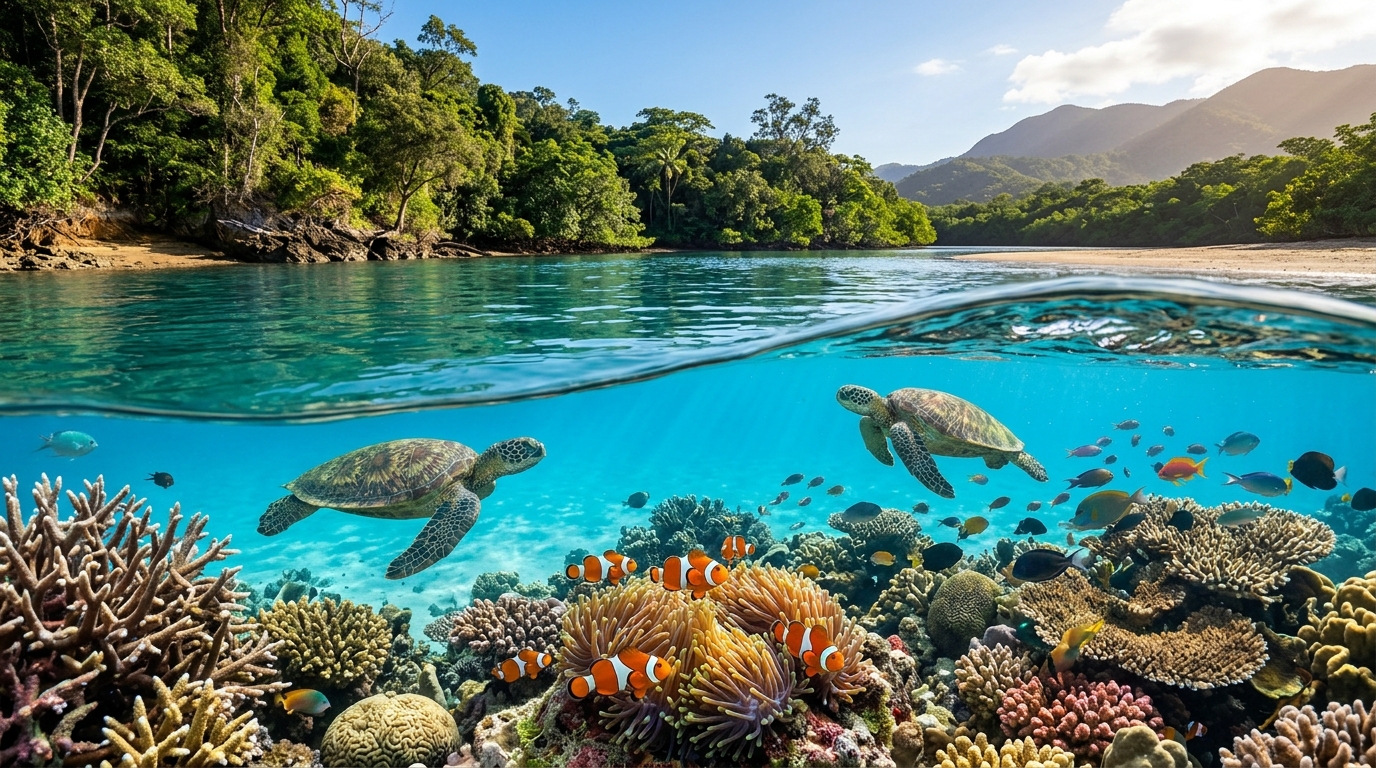
Covering over 71% of our planet’s surface, aquatic ecosystems represent Earth’s largest continuous living environment. Divided fundamentally into freshwater systems (rivers, lakes, wetlands) and marine biomes (oceans, estuaries, coral reefs, and abyssal trenches), these aquatic realms are distinguished by salinity gradients, hydrostatic pressure, light attenuation, and specialized trophic networks.
Water is the universal medium of planetary biology. While terrestrial organisms must expend immense metabolic energy constructing rigid structural skeletons and waterproof cuticles to defy gravity and desiccation, aquatic life is cradled in a buoyant, fluid matrix. However, the physical and chemical constraints operating within aquatic biomes—such as dissolved oxygen availability, osmotic pressure, hydrostatic forces, and photon penetration—are every bit as demanding as those on dry land.
In this comprehensive investigation, we compare the limnological principles of inland freshwater systems with the vast oceanographic realms of marine biomes. We examine osmoregulatory mechanisms, trace vertical light zones from sunlit epipelagic surfaces to pitch-black hydrothermal vents, and map the intricate trophic flows that sustain aquatic life.
1. The Great Salinity Divide: Osmoregulation and Physicochemical Baselines
The primary dividing line between freshwater and marine ecosystems is salinity—the concentration of dissolved mineral salts (predominantly sodium chloride, magnesium, sulfate, and calcium). Freshwater environments contain less than 0.5 parts per thousand (ppt) of dissolved salts, whereas open oceans maintain a remarkably stable average salinity of 35 ppt. Brackish estuaries fluctuate between 0.5 and 30 ppt according to tidal rhythms.
This salinity disparity establishes a profound physiological hurdle for organisms: osmotic equilibrium. Cell membranes are semi-permeable, allowing water molecules to move spontaneously toward regions of higher solute concentration:
- Freshwater Osmoregulation (Hyperosmotic Challenge): Freshwater fish maintain internal bodily fluids that are saltier than the surrounding water. Consequently, water continuously rushes into their bodies via osmosis, while essential electrolytes diffuse outward. To survive, freshwater teleosts never drink water intentionally; they absorb salts actively through specialized gill chloride cells and excrete massive volumes of highly dilute urine.
- Marine Osmoregulation (Hypoosmotic Challenge): Marine fish are less salty than the surrounding seawater. As a result, water is continuously sucked out of their bodies into the ocean, threatening fatal dehydration. To counteract this loss, marine fish drink seawater continuously, absorb the water through their intestines, and actively excrete concentrated excess salts through specialized gill pumps and scant, highly concentrated urine.
- Diadromous Migrators (Salmon & Eels): Diadromous species accomplish one of biology’s most astonishing feats: remodeling their gill enzymes, cellular transport proteins, and kidney functions as they transition from freshwater rivers to the open sea (anadromous salmon) or vice versa (catadromous freshwater eels).
Comparison Table: Freshwater vs. Marine Systems
2. Limnology: The Dynamics of Standing and Flowing Freshwater
Limnology—the scientific study of inland waters—divides freshwater ecosystems into two fundamental architectural categories:
- Lotic Systems (Flowing Waters): Springs, brooks, creeks, and rivers characterized by unidirectional flow, continuous physical turbulence, and longitudinal ecological gradients. The River Continuum Concept dictates that headwater mountain streams rely on allochthonous energy inputs (leaves falling from terrestrial riparian canopies), while wide, slow-moving lowland rivers rely on autochthonous algal photosynthesis.
- Lentic Systems (Standing Waters): Ponds and lakes where water resides for extended residence times, exhibiting thermal stratification and depth zonation.
Thermal Stratification and Lake Overturn Cycles
Because water reaches its maximum physical density at 3.98°C (39.2°F), deep temperate lakes undergo dramatic seasonal physical restructuring:
- Summer Stratification: Sunlight warms the upper surface layer (Epilimnion), making it buoyant and light. Below lies a sharp temperature transition zone (Thermocline or Metalimnion), which prevents mixing with the cold, dense, dark bottom waters (Hypolimnion). While the epilimnion is oxygen-rich, decomposing organic matter on the bottom can strip the hypolimnion of oxygen.
- Autumn Overturn: As autumn air cools the surface epilimnion down to 4°C, water density increases, causing surface water to sink. Gentle winds trigger a complete vertical mixing (lake overturn), recharging bottom waters with oxygen and circulating nutrient-rich sediments to the surface sunlit zone.
- Winter Inversion: When freezing air temperatures drop surface water below 4°C, it becomes lighter again, forming an insulating sheet of floating ice at 0°C while dense 4°C liquid water sits on the bottom, allowing fish and aquatic life to overwinter safely beneath frozen lakes.
3. Oceanography: Vertical Zonation from the Sunlit Surface to the Abyss
Marine environments are characterized by immense depth and three-dimensional vertical space. Oceanographers divide the pelagic water column into five discrete bathymetric zones based on light attenuation and hydrostatic pressure:
1. Epipelagic (Sunlight Zone: 0 to 200 meters)
The epipelagic zone receives adequate sunlight to sustain oxygen-generating photosynthesis. It constitutes less than 5% of ocean volume yet generates nearly 90% of all marine biological productivity. Trillions of microscopic phytoplankton—including diatoms, coccolithophores, and cyanobacteria like Prochlorococcus—form the foundation of the marine food web. Vast schools of herring, tuna, dolphins, and baleen whales forage in this sunlit realm.
2. Mesopelagic (Twilight Zone: 200 to 1,000 meters)
In the mesopelagic zone, sunlight fades to a ghostly dim blue, insufficient for photosynthesis. Organisms here have evolved gigantic, upward-facing tubular eyes and specialized bioluminescence. Species like lanternfish (Myctophidae) and hatchetfish possess photophores on their bellies that produce light matching the dim downwelling illumination—an optical camouflage technique known as counter-illumination.
This zone is the stage for Earth’s greatest animal migration: the Diel Vertical Migration (DVM). Every night, billions of metric tons of mesopelagic fish, squids, and zooplankton swim hundreds of meters upward into the surface epipelagic zone under cover of darkness to feed on phytoplankton, before plunging back into the deep twilight zone at dawn to hide from visual predators.
3. Bathypelagic, Abyssopelagic, and Hadal Trenches (1,000 to 11,000 meters)
Beyond 1,000 meters lies absolute, perpetual blackness. Water temperatures hover near freezing (1°C to 4°C), and hydrostatic pressures exceed 1,000 atmospheres in deep subduction trenches like the Mariana Trench. Deep-sea life survives on marine snow—a continuous gentle shower of organic detritus, dead plankton, and fecal pellets drifting down from upper layers.
Around tectonic spreading centers, deep-sea life breaks free from solar dependence entirely. Hydrothermal vents spew superheated mineral fluids rich in hydrogen sulfide. Here, specialized chemolithoautotrophic bacteria synthesize sugars via chemosynthesis, sustaining bizarre ecosystems of giant tube worms (Riftia pachyptila), blind vent shrimp, and ghostly white crabs thousands of meters beneath the sea surface.
4. Estuaries and Coral Reefs: Marine Biodiversity Epicenters
Estuaries occur where freshwater rivers discharge into the open ocean. These dynamic mixing bowls are among the most fertile ecosystems on the planet. Slower water velocities drop nutrient-rich river sediments, feeding vast salt marshes and mangrove stands that act as nurseries for commercial seafood species.
Coral reefs, often dubbed ‘the rainforests of the sea’, occupy less than 0.1% of the ocean floor yet support over 25% of all known marine species. Hard corals are symbiotic superorganisms: colonial cnidarian polyps harbor microscopic photosynthetic dinoflagellates called zooxanthellae within their gastrodermal tissues. The algae provide up to 90% of the polyp’s metabolic energy via photosynthesis, while the coral provides shelter and carbon dioxide.
5. Ecological Pressures: Eutrophication, Acidification, and Overharvesting
Aquatic environments are suffering catastrophic degradation from human industrial activities:
- Freshwater Eutrophication: Agricultural runoff loaded with synthetic fertilizers (nitrogen and phosphorus) triggers explosive cyanobacterial blooms. When the algae die, decomposing bacteria consume all dissolved oxygen, creating vast hypoxic ‘dead zones’ where fish and mollusks suffocate.
- Ocean Acidification: As humanity emits carbon dioxide, oceans absorb roughly 25% to 30% of atmospheric CO2. Dissolving CO2 forms carbonic acid, reducing ocean pH and depleting carbonate ions (CO32-). Consequently, shell-building marine organisms (oysters, pteropods, and corals) struggle to calcify their protective skeletons.
- Commercial Overfishing and Bottom Trawling: Industrial fishing fleets have depleted over 90% of large predatory pelagic fish (tuna, swordfish, sharks) and pulverized fragile benthic coral communities with weighted bottom-trawl nets.
6. Frequently Asked Questions (FAQs)
Q1: Why can’t a saltwater fish survive in a freshwater aquarium?
A saltwater fish has internal fluids adapted to resist dehydration against salty sea water. If placed in freshwater, osmosis forces water into its bodily cells at uncontrollable rates. Its kidneys and gills cannot process and excrete the overwhelming freshwater surge, causing cellular swelling, organ failure, and rapid death.
Q2: What is the biological significance of the Diel Vertical Migration?
The DVM is the largest synchronized biomass movement on the planet. Beyond feeding mesopelagic animals, it serves as the primary engine of the ocean’s Biological Carbon Pump. By feeding on surface carbon and excreting feces at deep depths, migrating animals actively transport millions of tons of atmospheric carbon into deep-sea storage daily.
Q3: How do hydrothermal vent organisms survive without sunlight?
They rely on chemosynthesis rather than photosynthesis. Specialized sulfur-oxidizing bacteria extract chemical energy from hydrogen sulfide (H2S) emitted by hydrothermal vents to convert inorganic carbon into organic carbohydrates. Giant tube worms harbor billions of these symbiotic bacteria inside a specialized organ called a trophosome, sustaining life completely decoupled from sunlight.
Aquatic biomes span from babbling mountain streams to 11-kilometer-deep ocean trenches. Mastered by osmoregulatory adaptations, vertical light zones, and dynamic nutrient pumps, both freshwater and marine environments provide essential services that sustain human life, produce half our planetary oxygen, and regulate Earth’s climate.
7. Planktonic Foundation: Diatoms, Dinoflagellates, and Marine Primary Production
While terrestrial biomes rely on towering vascular trees for primary production, the world’s oceans are powered by microscopic, single-celled floating organisms: phytoplankton. Despite accounting for less than 1% of the planet’s photosynthetic biomass, phytoplankton generate over 50% of the oxygen in Earth’s atmosphere:
- Diatoms (Bacillariophyta): Unicellular algae characterized by exquisite, rigid cell walls (frustules) constructed of biogenic hydrated silica (glass). Diatoms dominate cold, nutrient-rich coastal upwelling zones. When diatoms die, their heavy glass shells sink to the ocean floor, forming vast deposits of ‘diatomaceous earth’ and sequestering carbon in deep ocean sediments.
- Dinoflagellates: Biflagellated microalgae capable of vertical movement through the water column. While famous for generating mesmerizing bioluminescent tides and toxic ‘red tides’ (harmful algal blooms that secrete saxitoxins), dinoflagellates are also the indispensable endosymbiotic zooxanthellae that sustain tropical coral reefs.
- Picocyanobacteria (Prochlorococcus): Discovered only in 1988, this microscopic bacterium is the single most abundant photosynthetic organism on Earth, with global populations estimated at 3 octillion (10^27) individuals, producing 20% of the biosphere’s oxygen.
8. Marine Upwelling Zones: The Ocean’s Biological Oases
Most of the open ocean is an ecological desert because dead organic matter sinks into deep waters, leaving the sunlit surface depleted of essential dissolved nitrogen, phosphorus, and iron. However, in regions where prevailing winds push surface waters away from coastlines (Ekman transport), cold, nutrient-saturated bottom water is pulled to the surface—a phenomenon known as coastal upwelling.
These upwelling corridors—such as the Humboldt Current along Peru and Chile, the Benguela Current off southwestern Africa, and the California Current—occupy less than 1% of ocean surface area yet yield over 20% of the world’s total commercial marine fish catch, supporting billions of anchovies, sardines, seabirds, seals, and baleen whales.
9. Global Comparative Case Studies and Field Methodologies
Scientific exploration of Freshwater vs Marine Ecosystems: Limnology, Oceanography, and Aquatic Trophic Networks requires examining long-term empirical field data across diverse continents. Over the past five decades, ecological research stations—such as the Smithsonian Tropical Research Institute, the Long Term Ecological Research (LTER) network, and the European FluxNet system—have gathered millions of quantitative data points that demonstrate how microclimates, species interactions, and human pressures reshape habitat integrity over time.
Standardized field methodologies involve combining permanent forest dynamic plots (typically 50-hectare research quadrats where every tree exceeding 1 cm in diameter is tagged, mapped, and monitored) with eddy covariance flux towers. These towers rise high above forest canopies, measuring the continuous net ecosystem exchange (NEE) of carbon dioxide, water vapor, and heat fluxes between vegetation and the atmosphere at 20-millisecond frequencies, providing absolute empirical confirmation of planetary climate buffering.
Quantitative Field Metrics and Monitoring Parameters
10. Multilateral Policy Frameworks and 2030 Sustainable Development Goals
Preserving the integrity of Freshwater vs Marine Ecosystems: Limnology, Oceanography, and Aquatic Trophic Networks is intrinsically linked to achieving the United Nations 2030 Sustainable Development Goals (SDGs), particularly SDG 13 (Climate Action), SDG 14 (Life Below Water), and SDG 15 (Life on Land). International conventions, including the Convention on Biological Diversity (CBD) and the United Nations Framework Convention on Climate Change (UNFCCC), now mandate that national ecological action plans formally account for ecosystem services within gross domestic accounting systems.
Furthermore, the emergence of the Taskforce on Nature-related Financial Disclosures (TNFD) is revolutionizing corporate environmental responsibility. Multinational financial institutions and corporations are now legally required to assess, disclose, and actively mitigate their physical supply chain dependencies on wild ecosystems. By aligning private capital allocation with ecological regeneration, humanity is establishing the financial foundations necessary to ensure long-term evolutionary equilibrium across all global biomes.
Addressing the challenges outlined in ‘Freshwater vs Marine Ecosystems: Limnology, Oceanography, and Aquatic Trophic Networks’ demands a unified three-tiered approach: (1) Immediate legal moratoriums on industrial land conversion in primary frontier wildernesses; (2) Sovereign debt restructuring through debt-for-nature swaps that empower local conservation trusts; and (3) Scaling high-integrity biodiversity credits that directly fund local Indigenous communities and frontline conservation stewards.